Reliable Pipelines for a More Sustainable Tomorrow

PIPE SOLUTIONS
PIPE SOLUTIONS
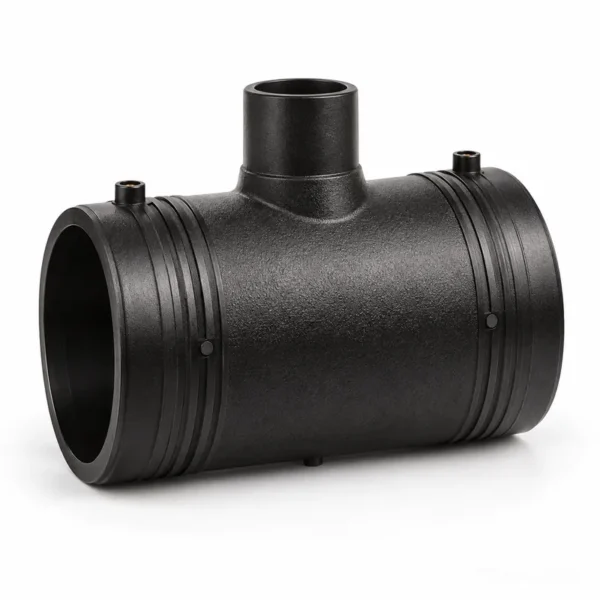
Electrofusion Reducing Tee: 7 Smart Checks for Better Fit
An electrofusion reducing tee creates a smaller branch from a larger polyethylene main line. It can simplify a branch layout, but selecting the right fitting still requires more than two diameter numbers. The run, branch, pipe specification and installation space must all work together. This guide helps project buyers prepare a clear enquiry and compare the supplied drawing with the pipeline design.
In this guide
The TPipes electrofusion reducing tee product page lists combinations from D63/50 to D400/315. These are specific listed combinations, not a promise that any main size can be combined with any branch size. Confirm the requested item and current technical documentation before ordering.
1. Read the electrofusion reducing tee size correctly
Write both the main-run and branch outside diameters on the RFQ. On the TPipes chart, D160/90 identifies a 160 mm main run and a 90 mm branch. The first number is not the overall fitting length, and the second is not a pressure designation. Keep the units and dimensional standard on the same line as the size.
If the drawing uses nominal inch descriptions, ask the designer or supplier to resolve the actual mating dimensions. Do not rely on a rough inch-to-millimeter conversion when ordering socket fittings. A small misunderstanding can affect every branch connection in the package.
2. Decide whether the branch needs a reducing or equal tee
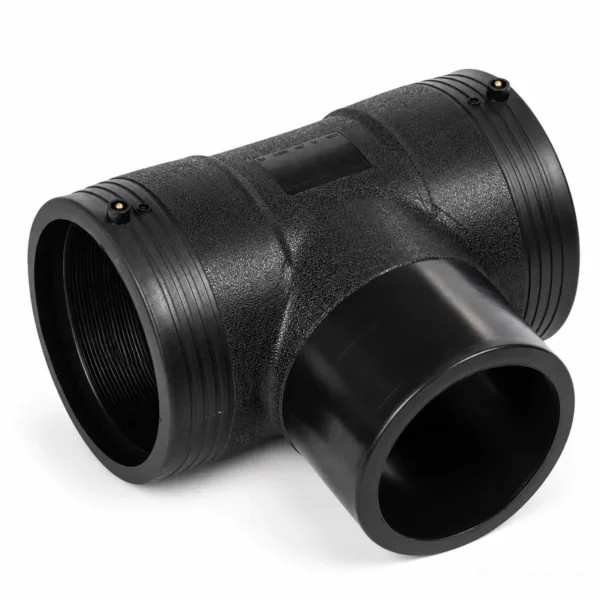
A reducing tee has a smaller branch, while an equal tee uses the same nominal connection size at the run and branch. Start with the approved hydraulic layout. Do not reduce the branch simply to use a fitting that is readily available; the branch demand and system design determine the required size.
Where all three connections need the same size, review the TPipes HDPE electrofusion equal tee. Where the branch is smaller, compare the integrated reducing tee with any engineer-approved alternative. Evaluate the complete layout, extra joints, available space and procurement scope before choosing.
3. Use the complete dimensioned drawing
Overall lengths and branch height affect installation clearance. The product chart uses L, L1, L2, L3, D, D1 and D2 labels. For example, its D160/90 row lists L as 325 mm, D1 as 160 mm and D2 as 90 mm. Interpret every other measurement using the approved drawing rather than guessing its reference point.
Send the supplier a layout showing nearby valves, elbows, supports and walls. Leave enough room for preparation tools, alignment equipment and the branch pipe. A fitting that matches the pipe diameter may still be difficult to install if the branch is too close to another component.
4. Confirm material, pressure and pipe compatibility
The published reducing tee chart does not establish a pressure rating, resin grade or SDR compatibility. State the conveyed medium, design pressure, temperature, pipe material and wall thickness requirements. Request written confirmation for the offered electrofusion reducing tee and the connected pipe specification.
For reinforced composite pipe, ask about the complete joint system. Do not infer compatibility from the appearance of the PE surface. Regulatory applications also require the appropriate approvals for the destination and service. Keep these technical requirements separate from commercial preferences such as packaging or marking.
5. Plan the branch installation sequence
Think through how the main and branch pipes will be positioned before the fitting arrives. Existing pipework may restrict movement, and branch alignment may require additional preparation. Have the installation team review access, isolation, support and the approved joining sequence. This is particularly useful for a retrofit rather than an open new-build layout.
An inline electrofusion reducing tee should not be treated as a tapping saddle or as permission to connect a live pressurized main. Those are different arrangements with their own designs and procedures. Describe the actual project condition in the enquiry so the proposed fitting function is clear.
6. Specify fusion equipment and joint quality records
Confirm the controller, connections and fusion data needed by the fitting. The installation procedure should cover pipe preparation, alignment, restraint, fusion and cooling. Settings must come from the supplied product documentation. Do not transfer a welding time or voltage from a different fitting merely because the main diameter matches.
Agree on the required inspection and traceability records at procurement stage. Identify who checks the fittings on receipt and who releases completed joints for testing. A consistent record of fitting identification and installation parameters helps the project team manage quality across multiple branches.
7. Compare the complete electrofusion reducing tee package
Request the number of fittings required at each main/branch combination. Include the pipe schedule, drawings, delivery destination and required date. Ask the quotation to identify documentation, marking and packing scope. If the supplier proposes an alternative arrangement, have the engineer review it before treating it as an equivalent.
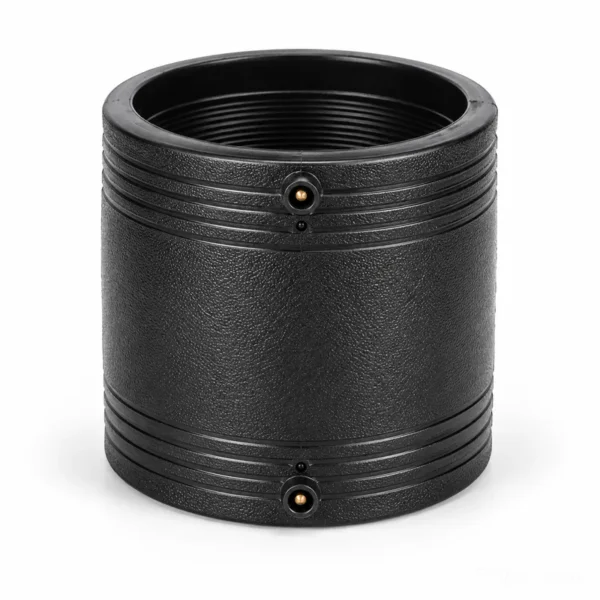
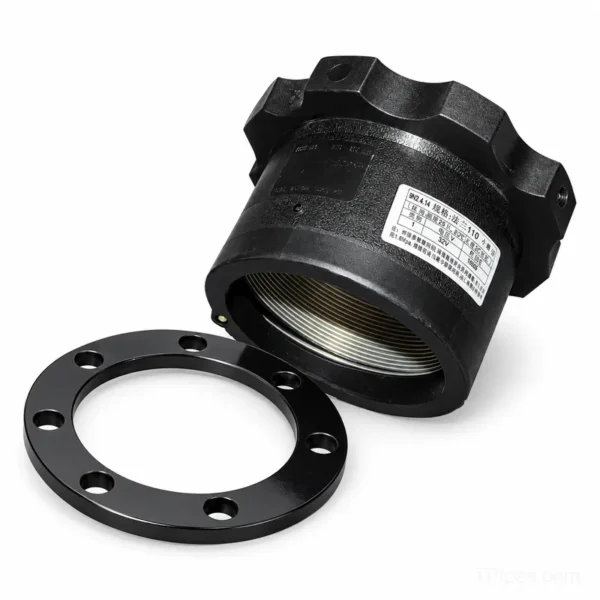
Also check straight connections and equipment interfaces. The electrofusion coupler connects straight pipe ends, while the flange adaptor set addresses a bolted interface. These components have different procurement checks and should have separate lines in the bill of materials.
Related components to identify on the branch drawing
A practical branch enquiry example
Instead of requesting “a tee for a 160 pipe,” specify a D160/90 reducing branch, the pipe dimensional standard, material and SDR, then attach the layout and operating conditions. State the required quantity and ask the supplier to confirm the offered drawing, system compatibility and equipment requirements. This gives the supplier a reviewable request without assuming an unverified pressure rating.
If multiple branches share the same main size but use different outlets, list each combination separately. A schedule with quantities beside every pair is easier to check than a single total that leaves the branch distribution unclear.
Frequently asked questions
Does a reducing tee remove the need for a separate reducer?
It integrates a smaller branch into the tee. Whether it replaces another arrangement depends on the approved layout and compatible product range.
Can any listed main size use any branch diameter?
No. Check the specific combinations in the current chart and confirm availability with the supplier.
How do I request technical confirmation?
Send TPipes your main size, branch size and project conditions. Include the drawing and quantities so the team can review the electrofusion reducing tee and related connection requirements.